How I Stopped Training Like A Man (And Started Training Like A Woman)

Hey there!
This month in the Cycle-Synced Marathon Experiment, I want to talk about how I actually track my cycle and training, because this is the part no one glamorizes; and also the part that changed everything.
Not in a “new me, who dis?” way.
More in a “wow, I’ve been fighting my body for decades” way.
The Moment It Clicked
For years, I trained like I was supposed to feel the same every single day.
Same output.
Same expectations.
Same internal shame spiral when my body clearly did not agree.
Once I started tracking my cycle, I realized the problem wasn’t my discipline, it was the training model.
My Not-Fancy, Very Real Tracking System
I use a monthly calendar I created, paired with a simple cheat sheet that shows the approximate phases of my cycle:
- Menstrual
- Follicular
- Ovulatory
- Luteal
I write in the estimated days for each phase...not because it’s perfect (it’s not), but because it keeps my brain aware of what level of energy I should plan for.
And yes, those days move around.
Because women are not robots.
And no one’s cycle clocks in at the exact same length every month.
The cheat sheet also reminds me:
- When carbs need to come back into the picture
- When fasting windows can be longer
- When recovery should be the main event
This framework comes from combining what I’ve learned from Mindy Pelz and other experts. But the real learning happened when I tracked my own cycle consistently for about three months.
I used the Lively app to make it easy, but honestly? A notebook works just as well. Digital or analog doesn’t matter. Paying attention does.
What I Track for My Runs (Because Data > Guessing)
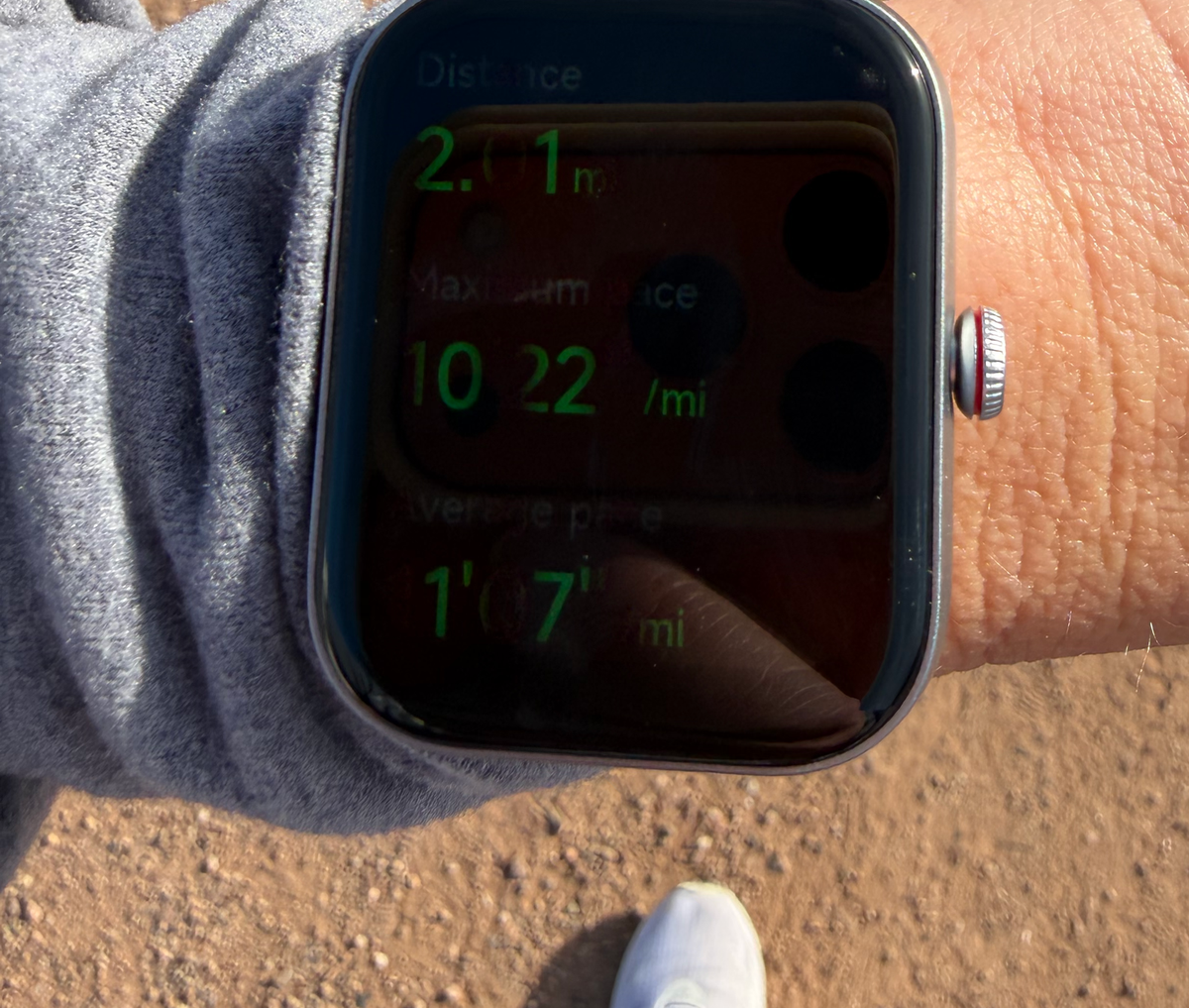
I also keep a running journal and mark my calendar daily. For each run, I track:
- Average pace
- Highest & lowest heart rate
- Output
- Top speed
- Cycle phase
- Type of run (HIIT, endurance, long distance, etc.)
- How I feel at the end of the day
That last one turned out to be way more important than I expected.
I also note:
- Immune stuff (because my allergies are currently choosing violence)
- Whether I’m fasting; and for how long
- Indoor vs outdoor runs
If my sinuses are wrecked and breathing feels optional, I don’t force a run to prove a point. I switch to weights or yoga without guilt. Because this isn’t punishment...it’s training.
The Non-Negotiables: Food, Sleep, Recovery
No matter what flexes:
- I eat to support the phase I’m in
- I prioritize 7–8 hours of sleep
- I support sleep when my cycle needs help (magnesium + certain teas have been clutch)
Training is flexible.
Fuel and recovery are not.
Why This Works (And Why the Old Way Didn’t)
Here’s the part most training plans ignore:
Men operate on a 24-hour hormone cycle.
Women operate on a 24–32 day hormone cycle.
Men can scale training like a steady slope = push, recover briefly, push again.
Women aren’t built that way.
Our training should look more like a 40-degree pyramid = building up, peaking, and intentionally coming back down every month. Expecting constant output across an entire cycle makes absolutely zero biological sense.
This experiment is my way of seeing if I can run a marathon with an average finish time (around 4 hours and 30 minutes) without feeling like death afterward.
Not by doing more.
But by finally doing what works for a female body.
This Month’s Takeaway
If this sparks curiosity, don’t overhaul your life.
Just track your cycle for one month.
Notice energy patterns.
No fixing. No optimizing. Just observing.
Next month, I’ll break down how I choose workouts within each phase, and how I decide when to push versus pull back.
We’re building this one layer at a time.
Regina