Why "Hormone Balance" Isn't The Goal (And What Actually Is)

Hey there!
Somewhere along the way, women were taught that if their hormones feel off, the goal is to “balance” them.
Balance your estrogen.
Balance your progesterone.
Balance cortisol.
Balance everything.
But here’s the part almost no one explains:
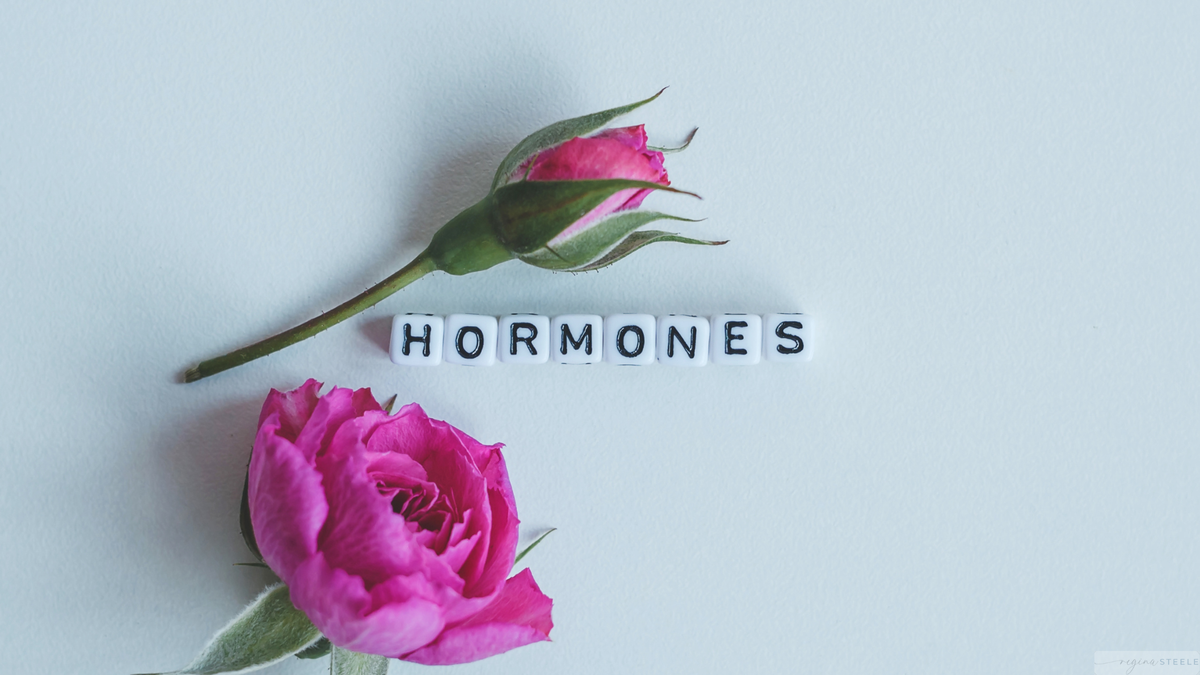
Hormones are not meant to be balanced.
They are meant to fluctuate.
The female body is designed to move through phases, shifts, rises, and dips. Estrogen rises and falls. Progesterone rises and falls. Cortisol changes throughout the day. Even thyroid hormones adjust based on stress, sleep, and energy needs.
That movement isn’t dysfunction.
It’s design.
The problem isn’t that hormones change.
The problem is when the body loses resilience in handling those changes.
And that usually traces back to something deeper.
Remember what we talked about last week? The nervous system.
When the nervous system is stuck in protection mode, hormone signaling changes. The body begins prioritizing survival over reproduction, repair, and long-term regulation.
That can look like:
• shorter or irregular cycles
• heavier or more painful periods
• mood swings that feel intense or unpredictable
• increased anxiety before your cycle
• low libido
• energy crashes
• stubborn weight changes
It’s tempting to label all of that as “hormone imbalance.”
But often, hormones are responding to stress signals upstream.
Your body isn’t confused.
It’s adapting.
Hormones are messengers. They respond to what the body perceives as safe or unsafe, supported or depleted.
When sleep is inconsistent, when blood sugar is unstable, when stress is chronic, when recovery is minimal; hormones adjust accordingly.
That’s not betrayal.
That’s intelligence.
Instead of chasing perfect hormone levels, the real goal is supporting the systems that allow hormones to regulate naturally:
• a nervous system that feels safe
• stable blood sugar
• adequate nourishment
• restorative sleep
• sustainable movement
• emotional processing instead of suppression
When those foundations improve, hormones often follow.
This is especially important for women two years postpartum and beyond, and for women approaching perimenopause. Hormonal shifts during these seasons aren’t problems to eliminate; they’re transitions to understand.
When you understand what phase you’re in and what your body needs during that time, the experience feels less chaotic and more navigable.
You stop asking, “Why is my body doing this to me?”
And start asking, “What is my body adjusting to right now?”
That question changes everything.
We’ll keep unpacking this in the coming weeks, because understanding your hormonal landscape is one of the most powerful things a woman can do.
For now, release this idea:
You do not need perfectly flat, predictable hormones to feel good.
You need a body that feels supported.
And that is something you can build.
Regina